
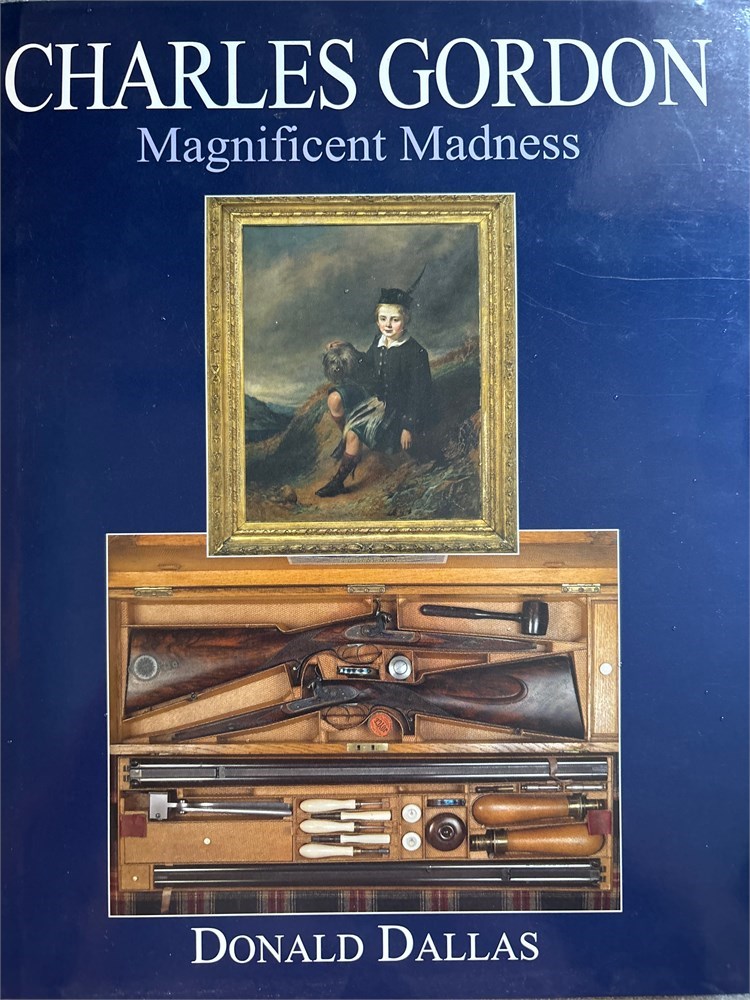
Charles Gordon Magnificent Madness By Donald Dallas View Watchlist >
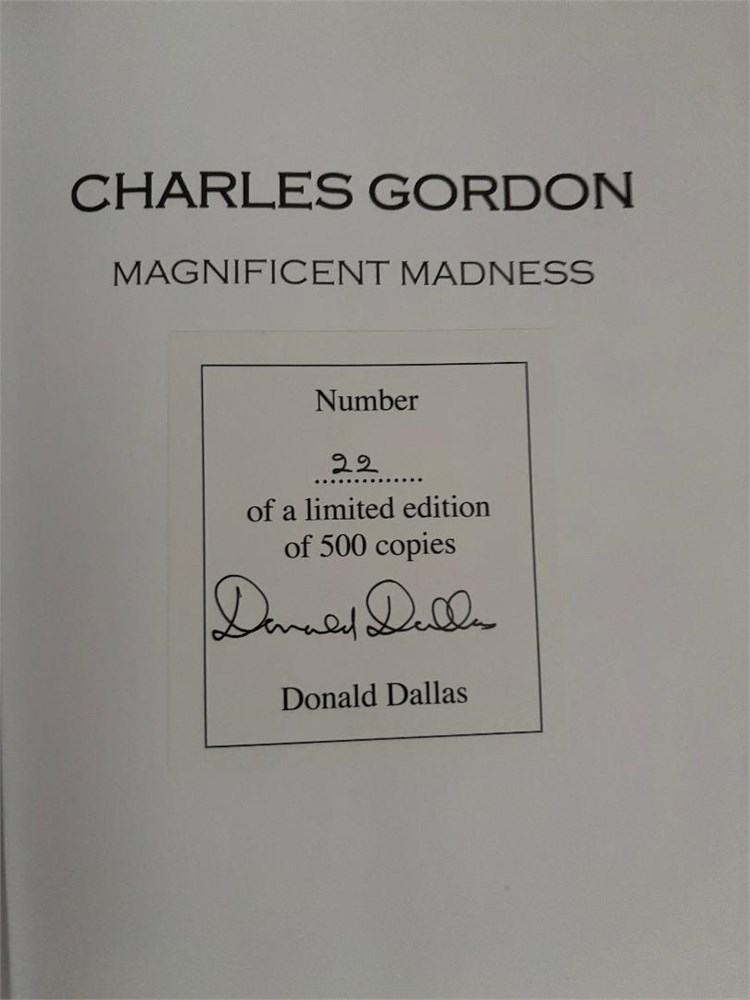
Limited Edition Of Only 500 Signed Copies
Seller Accepts PayPal
Thank you for your business , I post within 1-2 days.
Item # 1067191
Start Date
End Date
1 Watching
114 Page Views
Charles Gordon
'Magnificent Madness'
by
Donald Dallas
Number 22 Of 500
Signed by the author.
Hardback with dust jacket.
Well illustrated with photographs and archive ephemera.
New book in a near fine dust wrapper.
Very rare book & hard to find
Charles Gordon has been a paradox for a considerable number of years.
On the one hand his name is known throughout the world, yet on the other hand absolutely nothing was known about the man himself.
Donald Dallas undertook considerable research into Charles Gordon and the story he uncovered is one worthy of any fictional drama. Charles Gordon was a man of wealth and substance, born into an old established family, but a man of unsound mind with a mania for collecting, not only guns but wine, fishing tackle and books, a man who bankrupted his estate ending his days alone with all his possessions sold, insane and incapable of running his affairs.
“This book is a major contribution to the recording of sporting heritage. It deserves a place in the library of anyone who loves fine British guns.”
Charles Gordon was born in 1853, but shortly after his birth his mother died and since his father was a serving army officer, he was adopted by his aunt and uncle who lived at Halmyre House near Peebles in the Scottish Borders. By the time he was 14, his uncle and aunt had both died and although he inherited the large Halmyre estate along with a considerable income, he was left alone to fend for himself. He was of unsound mind throughout his life, one aspect of this being a desire to collect on a massive scale. He bought over 300 guns, rifles and pistols of the very best quality, all in sumptuous cases, about half being muzzle-loaders, a system that was completely obsolete at the time of purchase. Even his breech-loaders were quirky and out of date and he never fired the majority of his collection.
In 1908 a Curator Bonis had to be appointed to direct his life and his house, estate and his possessions were all sold including his gun collection. He died in 1918 in a humble cottage on his old estate.
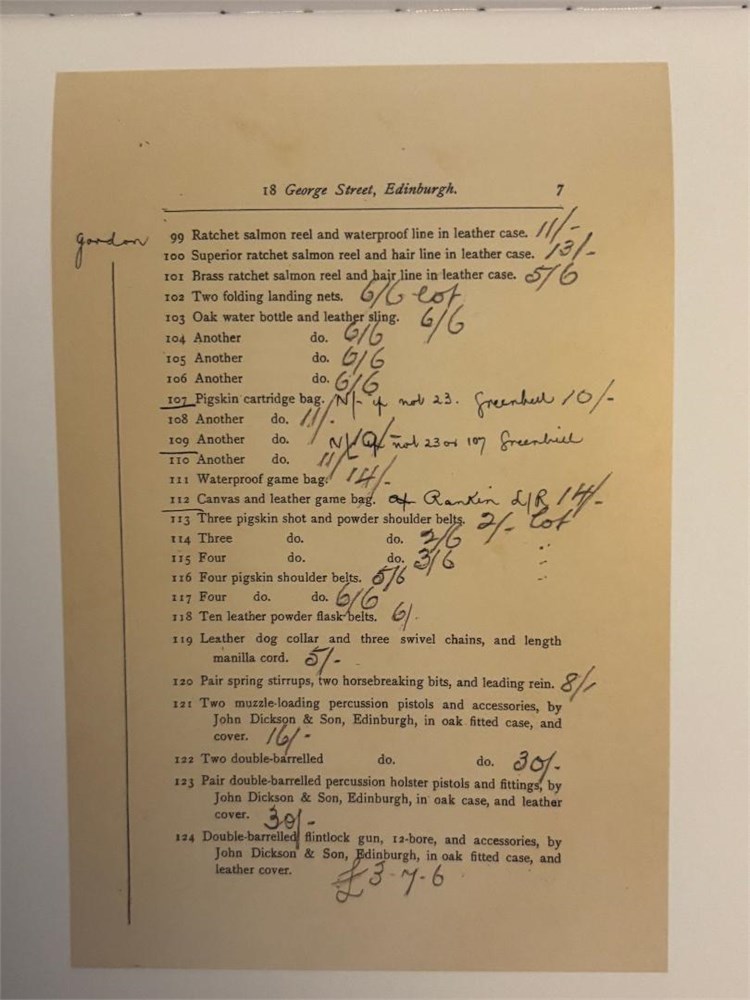
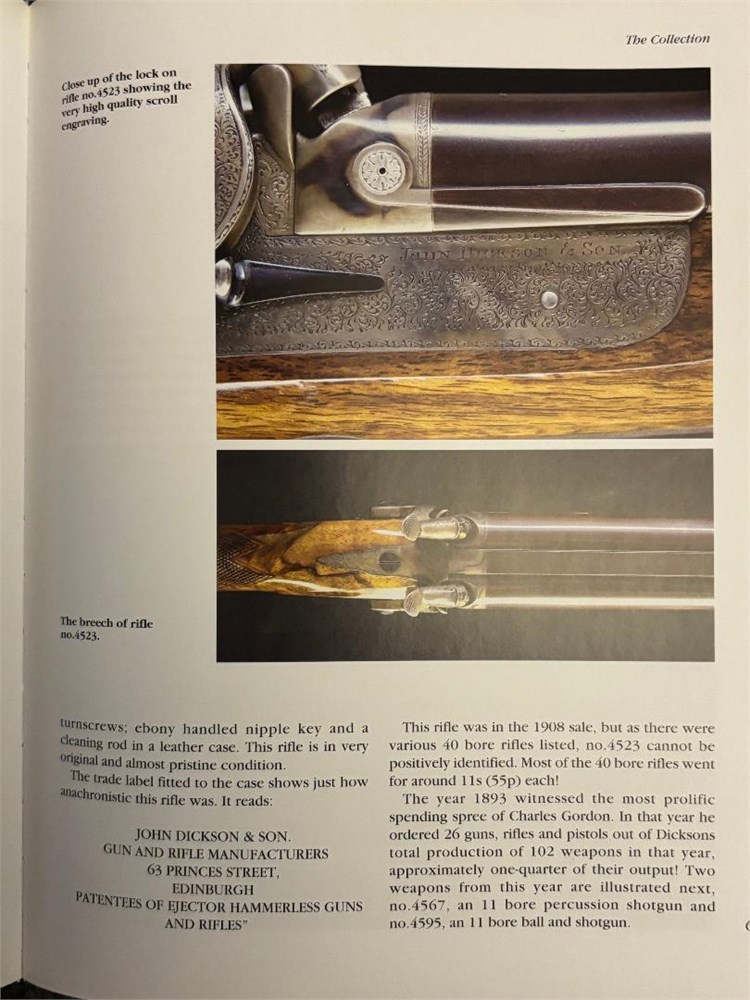
This book uncovers the privileged yet tragic life of Charles Gordon for the first time. His collection is described in great detail and all his known purchases are listed. The 1908 sale catalogue of his muzzle-loaders is reproduced that will be of great interest to owners of Gordon guns. No longer will Charles Gordon be an enigma, his magnificent madness will enthral all.
CHARLES GORDON, ECCENTRIC OR MAD? By Donald Dallas
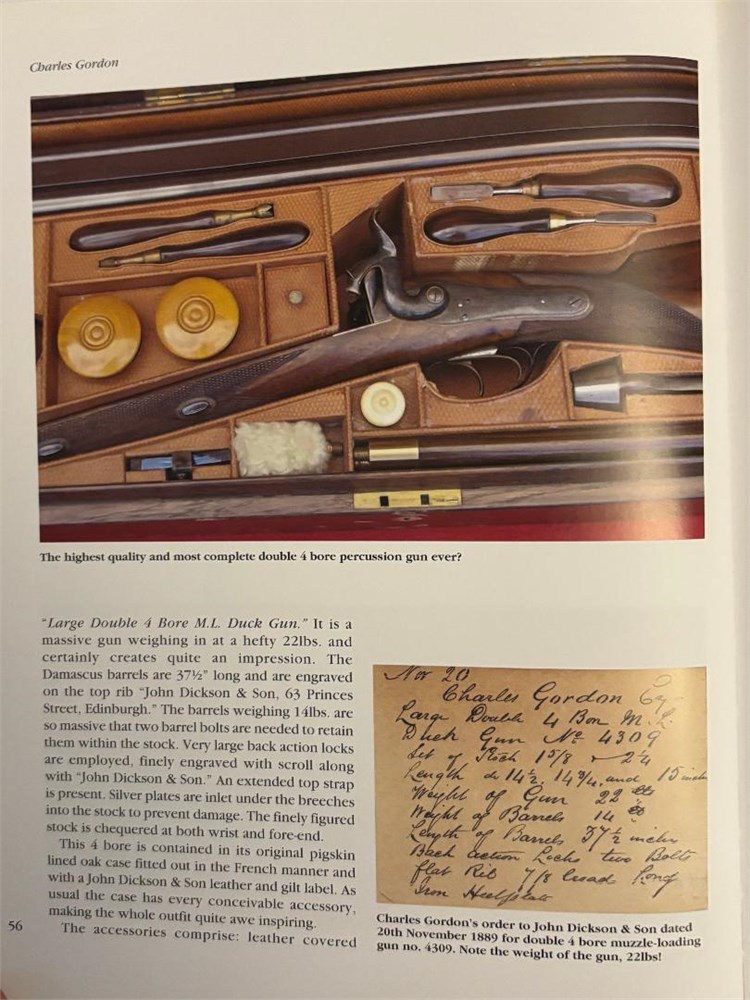
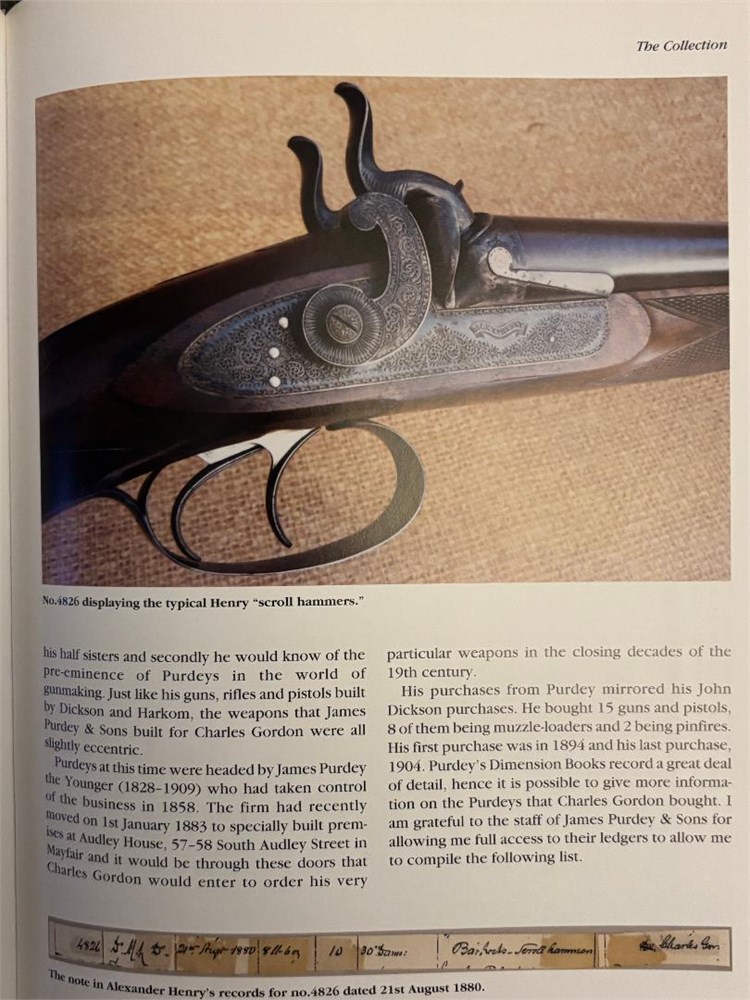
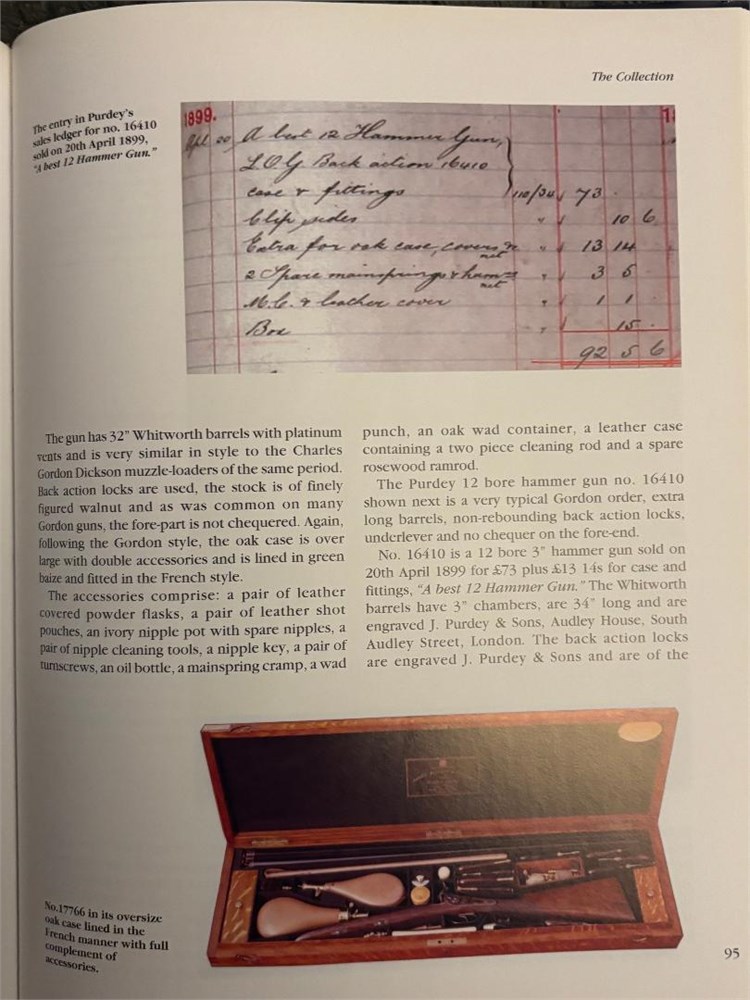
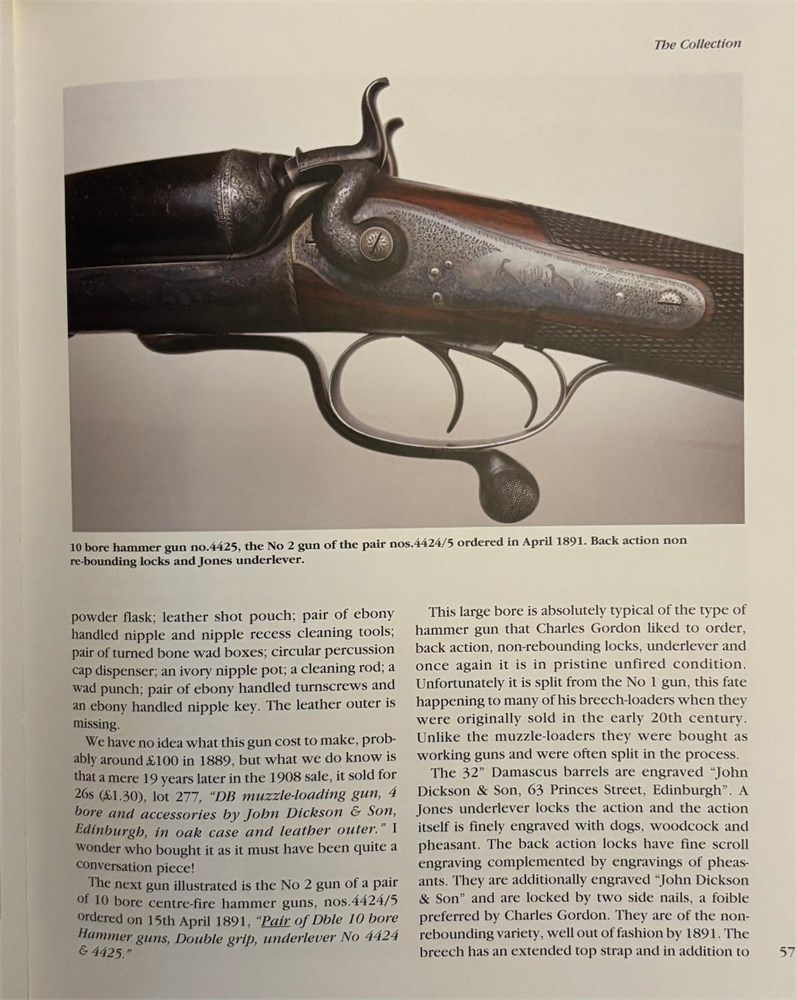
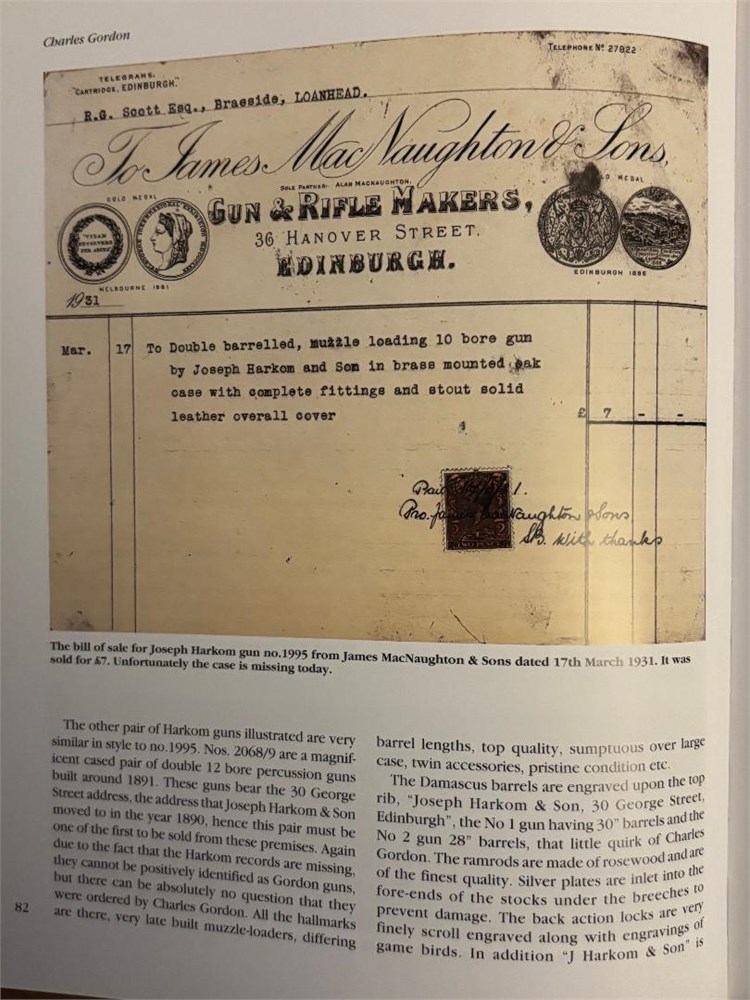
What do you do on Christmas day? Same as most people, family, presents, big meal, TV? Well not if you are Charles Gordon and the date is the 25th December 1888. You leave your estate, travel by train to Edinburgh, get out at Waverley station, walk along Princes Street until you come to no. 63, enter John Dickson & Son’s shop and order yourself a spectacular Christmas present, a double 4 bore hammer shotgun weighing 24lbs and with 42” barrels. The Charles Gordon story is a fascinating mix of wealth and pathos, worthy of any fictional drama; a gentleman of substantial means, profligate in his purchase of hundreds of guns, yet very eccentric, eventually losing his estate, wealth and personal power, ending his days alone and humble, living in a small cottage on his once large estate. Between 1868 and 1906, Charles Gordon bought 229 brand new top quality guns, rifles and pistols from John Dickson & Son, around 30 from Joseph Harkom & Son, 8 from Alexander Henry and 15 from James Purdey & Sons. He spent over £10,000 on buying these guns, an enormous sum of money in the late 19th century. Apart from the sheer size of the collection, three things make his collection highly unusual. Firstly, he never fired any of his firearms. Secondly, around half were muzzle-loaders, completely obsolete in this period and thirdly, many were quirky such as pairs having different bore sizes, barrels being way over the normal length and so on. In addition, the majority of his collection were all housed in lavish cases filled with every conceivable accessory, (even dog whistles!) with many of the accessories duplicated in the double cases. Charles Gordon was born into a life of privilege. He owned, from a very young age, Halmyre Estate comprising nearly 5000 acres near Peebles in the Scottish Borders. Yet far from being a simple story of luxury, his life was dominated by a series of tragedies, culminating in the creation of a man of unsound mind or eccentricity depending upon your point of view. It would be these tragedies that would shape Charles Gordon’s lifestyle leading him to adopt a hedonistic philosophy of spend, spend, spend. The Gordon family were wealthy professionals from Edinburgh and in 1808; they bought a country estate, Halmyre near Peebles with its ancient keep, Halmyre House. Charles Gordon’s father, Archibald Gordon graduated in medicine from Edinburgh University and joined the army as a surgeon. Posted to Rochester in Kent with his regiment, his wife gave birth there on 11th May 1853 to their first child, that they named Charles Ferrier Gordon. But then tragedy struck for the first time. His mother died 18 days after the birth, creating a difficult decision for his father. How could he look after his infant son due to his military commitments? He came up with an immediate and pragmatic solution that would radically alter the life of Charles Gordon. His elder brother Richard Gordon had taken over Halmyre estate and baby Charles would go and live with him. It was ideal as the two brothers had in fact married two sisters hence the bond would be close between baby Charles and his aunt and uncle. The other factor that fitted perfectly into the jigsaw was that Richard Gordon and his wife had no children hence baby Charles would be brought up as if he were their own. Young Charles didn’t see much of his father after this due to his frequent overseas military postings. He eventually re-married, siring three daughters and spent the rest of his life in London after retiring from the army as a general. Charles was doted on by his aunt and uncle at Halmyre, no doubt completely spoiled. But then tragedy hit again. Whilst returning to his horse and carriage in 1865, something spooked the horse and it kicked up its hind quarters breaking Richard Gordon’s leg. His leg had to be amputated but the bleeding could not be stopped and he died. Charles Gordon was aged just 12 and now he had lost his uncle. The fickleness of fate of the 19th century again reared its ugly head and almost two years to the day after the accident, Charles Gordon’s aunt died. He was just 14 years old and was now, to all intents and purposes alone in the world. In his aunt’s will, she left everything to her nephew Charles; he would inherit the Halmyre estate and their considerable Edinburgh property when he reached 25 years old in 1878. She also added in her will that her wish was that Charles go into the army or be a member of the liberal professions. No chance – Charles Gordon was a wealthy man with a mission to amass. He bought his first gun from John Dickson & Son in 1868 and by the time he inherited the estate in 1878, there was no stopping him. He bought over 300 brand new guns, rifles and pistols between his first purchase in 1868 until his last in 1906. (One Example Available For Purchase https://maxogun.com/Listing/Details/1048772/A-RARE-John-Dickson-Son-12-Bore-Rotary-Under-Lever-Hammer-Gun-No4555 ) In some years he bought up about one third of Dickson’s output e.g. in 1885 he ordered 17 guns, rifles and pistols. How Dicksons must have rubbed their hands with glee when he came into the shop. In 1876 he ordered his first muzzle-loader from Dickson, one of 126 muzzle-loaders. As his collection progressed, he became even more eccentric in his purchases, seeming to go backwards in time. He began to order pinfires and as far as his muzzle-loaders were concerned he regressed. In 1890, he bought his first flintlock, a pair of blunderbusses in 1893 (Available For Purchase https://maxogun.com/Listing/Details/933433/A-UNIQUE-PAIR-OF-8BORE-FLINTLOCK-BLUNDERBUSSES-BY-JOHN-DICKSON-SON) and his first tubelock in 1900.
He didn’t just collect guns, he also collected wine and books. He had thousands of bottles in his house and as for the books. How fascinating Halmyre House must have been in the late 19th century. It has no gun room so the guns must have been stacked everywhere in their magnificent cases in all rooms, competing with space for the books and wine. Not content with Halmyre, he also had a substantial shooting lodge, Baddinsgill, built about 5 miles away near his grouse moor. Was he eccentric or was he of unsound mind? By the early 20th century, his profligate purchases had near bankrupted his estate. In 1908 a trust was set up to administer his affairs. However, his three half sisters (all unmarried) were not happy with this and petitioned the Court in Edinburgh for a Curator Bonis to be appointed. This was granted in June 1908 and Charles lost all his financial powers and the control of his life. The Court was provided with medical evidence concerning his state of mind, one doctor saying, “For many years he had been weak minded, childish, facile and easily imposed upon…incurring debts by his extravagant and absurd purchases”. (his collection) Another doctor added, “He was throughout his life of unsound mind”. The sisters wasted no time in selling off the estate and its contents. On 20th June 1908, his muzzle-loaders came up for sale at Dowells saleroom in Edinburgh. There were 383 lots and all went for a mere pittance considering that most would have cost £50-£75 each. Percussion rifles went for around 75p, percussion shotguns around £1, percussion pistols 50p-£1 50. The flintlock shotguns and pistols fetched a high price though, between £3 and £6! What people were buying in 1908 were essentially toys regarded as amusements or conversation pieces. They all went to Edinburgh buyers and here they would remain until the increasing level of interest in antique firearms in the 1960’s meant that they began their steady ascent to the very high prices they fetch today. Charles Gordon died on the 6th February 1918 on a small cottage on his old estate aged 64 from a heart attack. His three half sisters by now owned Halmyre House and had sold off most of the land. Was he of unsound mind or just one of life’s eccentrics? Was he the victim of the machinations of his three half sisters or were they genuinely concerned about their half brother?
Whatever your view, Charles Gordon is not forgotten, his magnificent madness enthrals us all.
There are no questions for this listing.